


The insurance industry in India is changing. From being a service-oriented market driven by price considerations to becoming a much more sophisticated system, where the focus is on fulfilling the customer’s need for trust and risk management, the insurance industry in India is evolving. With technology becoming increasingly pervasive and complex, brokers have become essential facilitators in the process.
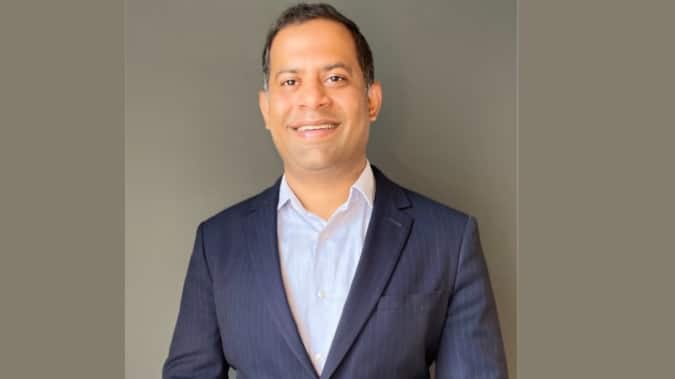
In conversation with FE BFSI, Venkatesh Naidu, CEO at BajajCapital Insurance Broking Ltd., highlights how India’s insurance sector is moving from transactional selling to need-based advisory, driven by rising demand from Tier 2 and 3 markets. He underscores the growing importance of a ‘phygital’ model, where digital discovery meets human guidance, especially for complex financial decisions.
1. How is the insurance broking business evolving in India, and what key trends are you seeing today?
The insurance industry is finally moving beyond transactional-products pushing to deeply understanding people’s genuine needs. For years, it was a straightforward exchange, but that paradigm is rapidly evolving. Several key trends stand out.
Firstly, the conversation around insurance is no longer confined to metro cities. We’re seeing remarkable interest from tier-2 and tier-3 towns. Secondly, our focus has sharpened from merely outlining policy features to asking, ‘what does this customer actually require to feel secure?’ This represents a profound shift in mindset.
Most compellingly, the traditional boundaries between broking, technology and financial planning are blurring, which we view as an immense opportunity. Supportive regulations have cultivated a fertile ground and, frankly, I believe we’re still in the nascent stages of realizing its full potential.
2. With more consumers going online, how has digital transformation changed the way insurance is bought and sold today?
It’s quite remarkable. The customer’s journey now typically starts long before direct engagement. By the time an individual reaches out, they’ve often conducted extensive online research, compared platforms and formed initial perspectives. This is a monumental change. However, India hasn’t transitioned to a fully digital market, and I don’t anticipate it will anytime soon.
We operate in a ‘phygital’ environment. Simpler products, like basic terms or health plans, transact seamlessly online. Yet, for complexities, a nuanced business policy or customized family plan people still prefer speaking with an expert. This isn’t distrust of technology; it’s because the personal stakes feel incredibly significant. Digital advancements have truly excelled in bridging the information gap: comparison is faster, access easier and pricing more transparent. This, without a doubt, is a substantial victory for consumers.
3. What are the biggest challenges customers face when choosing insurance, and how can platforms simplify this process?
Let’s put ourselves in their shoes. Imagine trying to differentiate between five seemingly identical plans, sifting through a policy document that reads like a dense legal brief, knowing crucial exclusions. It’s an incredibly daunting and exhausting process and candidly, overall there’s definitely room to simplify and improve the overall experience.
Paradoxically, an abundance of choice creates its own problems; twenty options don’t empower, they paralyze. Beneath all of this, there’s always that nagging question: ‘will this actually deliver when I need it most?’
There’s still some hesitation among customers, largely due to past misunderstandings or lack of clarity. Platforms have a significant role here. We should strive to present fewer, more precisely matched options, communicate in clear language and lead with verifiable claims data, not just features. Helping someone understand precisely, what they are acquiring and what they are not, is the most challenging part of building that relationship.
4. How do you ensure transparency and build trust while offering multiple insurance options on a comparison platform?
Trust in the insurance sector isn’t built on mere promises; it’s forged through absolute clarity. Many customers have, unfortunately, had less-than-ideal experiences. They might have purchased a policy, filed a claim and found things didn’t unfold as anticipated. More often than not, this stems from a lack of clear understanding at the point of purchase, rather than malicious intent.
For us, transparency begins with unwavering objectivity. As a broker, our fundamental responsibility is to advocate for the customer, not the insurer, even if that means recommending a solution that might not yield our highest margin.
Beyond that, our emphasis is on explanation, not just disclosure. There’s a critical distinction. When customers possess a crystal-clear understanding of pricing, features and exclusions from day one, you cultivate a relationship that endures far beyond a single transaction.
5: In a price-sensitive market like India, how do you balance affordability with adequate coverage?
Price sensitivity is undeniably a significant factor. I wouldn’t suggest otherwise. However, my consistent observation is that people aren’t necessarily unwilling to pay; they simply haven’t been presented with the complete picture. When discussions solely centre on the premium amount, coverage almost invariably suffers. In this scenario, an individual might be technically insured but, critically, not actually protected.
The shift I’m eager to see more widely adopted is starting the conversation with the customer’s needs. What are their potential liabilities? Who depends on them financially? What existing coverage do they already possess? Once we honestly map out these crucial elements, the most suitable product becomes significantly clearer, and so does the true, often hidden, cost of being underinsured.
Affordability is vital, but being ‘affordable’ yet underinsured is, in essence, a problem waiting to manifest; it just happens to surface at a later, more critical juncture.
6. What role can insurance brokers play in improving insurance penetration in India?
At 3.7 per cent of GDP, India's insurance penetration tells you two things at once: how much ground still needs to be covered, and how much room there is to grow. Brokers like us have a specific role to play here.
The structural difference is important as we represent the customer, not the insurer. That changes the nature of the conversation entirely. We're not walking into a room trying to move a product. We're trying to understand customers’ situations and find out what actually works for them. There's also an aggregation opportunity that brokers are uniquely positioned to unlock rural clusters, SME groups and informal sector workers. Bringing that demand together and structuring the right cover for it is where brokers can create real, lasting impact.
7. How are you using technologies like AI and analytics to improve customer experience and claims processes?
To be candid, technology in many areas of the insurance space still holds more promise for the future than the current widespread reality. However, I’m pleased to say we are making substantial and meaningful progress. Analytics, for instance, enables us to engage with customers at, precisely, the most opportune moment, moving beyond generic messaging.
Advancements in Natural Language Processing (NLP) tools are making policy language far less intimidating. This might sound minor, but when confusion is the primary barrier to purchase, its impact is profound.
Regarding claims, improved integrations provide customers with unprecedented visibility. They can now track their claim in real-time, eliminating repeated calls and anxious waiting. This reduction in uncertainty is far more valuable than many realize.
Insurance, at its core, is about providing peace of mind. If the claims process feels opaque or adversarial, it fundamentally undermines the entire purpose of having coverage.
8. How is your company differentiating itself in a highly competitive market?
Honestly, for us, it's less about beating the competition and more about staying true to our business. We come from the Bajaj Capital family with 60-plus years of helping Indians with their finances. That shapes how we think about insurance.
We don't see a policy sale as a transaction. We see it as understanding what a customer genuinely needs, considering their life circumstances and financial goals, and then finding the right fit for them. That kind of thinking changes the quality of service you deliver.
The other thing we've doubled down on is flexibility — I mean genuine flexibility, not just a checkbox. Some of our customers want to buy a policy on their phone at 11 at night. Others want to sit across the table from someone they trust and walk through their options.
We've invested in being truly good at both, which is harder than it sounds. At the end of the day, we're not just here to sell covers. We want to be the partner families come back to for life, health, motor, home because they trust us. That's the differentiator that actually lasts.
9. Looking ahead, what will define the next phase of growth for the insurance industry in India?
If I had to point to what shapes the next decade in Indian insurance, it comes down to three things.
The first is product innovation. We're going to see insurance show up in places it hasn't before — parametric covers, micro-insurance designed around how gig and informal workers actually live and insurance embedded quietly inside everyday journeys like e-commerce and mobility. The product has to fit life, not the other way around.
The second is regulatory maturity. The IRDAI's Bima Sugam vision, and the broader ambition of insurance for all by 2047, aren't just policy goals; they will fundamentally change how insurance is distributed and what it costs to reach people.
The third is data. As health, credit and behavioural data becomes more structured and shareable with the customer's consent, underwriting will get sharper and pricing will get fairer. That's a meaningful shift for a market where broad assumptions have historically driven premiums.
For brokers, the opportunity in all of this is to stop being just a distribution link and start being a genuine risk advisor across a customer's lifetime.
The companies that build the right technology, develop the right talent and hold on to trust, will define what this industry looks like on the other side. At BajajCapital, that's the journey we've chosen to be on.