

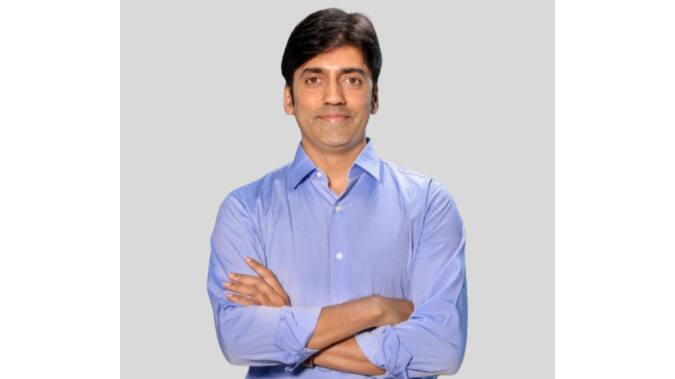
Kunal Bahl - An entrepreneur who has built India’s first e-commerce unicorn – Snapdeal, sits across a founder pitching a startup. The numbers are still on the Excel sheet, the market is nascent, and the competition is fierce. Many investors choose to pass. But having been through the journey himself, he recognizes something others don’t. He recognizes the early signs of potential. He writes the cheque, mentors through the pivots, and connects the founder to his network. That startup? Urban Company. Today, valued at $2B after getting listed.
This is not an on-off story. It reflects a larger shift in how India’s next VC revolution, the Circular VC Model, can grow. Where the exited founders, instead of stepping away, reinvest their personal capital, time, networks, and experience back into the ecosystem. This is also a philosophy I actively follow while backing founders, choosing to stay involved beyond just capital and supporting them through their growth journeys. Having built and exited businesses and invested across sectors such as diagnostics, gaming, community, and consumer brands, I have seen the limits of the traditional, one-cycle approach to venture capital. The circular model? It's the flywheel that could turn India's $5.3 billion VC market into a $20 billion powerhouse by 2030.
A Step Beyond Exit
As India’s startup ecosystem has grown rapidly over the past decade, it has gone from a handful of unicorns to well over a hundred, with billions of dollars flowing into startups each year. This feat took Silicon Valley 2 decades. Progress, yes. But here's the inefficiency: many exited founders disappeared.
Growth alone is not enough. When founders exit, many of them step away from the ecosystem. The financial success of these exited founders gets channeled into other worthy pursuits. Yet their operator instincts, spotting product-market fit, mastering tough negotiations, and scaling teams from 10 to 10,000 hold immense value awaiting new ventures.
Contrast this with Silicon Valley, where Paul Graham (Y Combinator) didn't just fund Airbnb, he coded their first growth loops. Reid Hoffman (LinkedIn) backed more than 100 startups, creating the "Pay It Forward" culture. India needs its version: Circular VC, where exits fuel the next wave.
The Circular Flywheel Model
The model is simple but effective: Exited founders allocate a significant part of the proceeds to seed/Series A syndicates. These aren't just hobby cheques, but high-conviction bets shaped by their experience. They spend significant time as an investor or mentor working with a handful of startups each year, sharing practical inputs like what worked in their own fundraises or how they fixed pricing when margins were under pressure. The right introductions can open doors that would otherwise take years to access. Over time, these networks grow in value and often create more impact than capital alone. Founders turned investors who have built companies themselves and understand that success takes time. They stay involved through difficult phases, from pivots to slowdowns and focus on building long-term outcomes rather than quick exits.
The Road to $20B VC Market
India’s VC market today stands at around $5.3 billion. While funding has seen ups and downs in recent years, one challenge remains — relatively few startups reach meaningful exits. If even a part of the wealth created from exits is reinvested into early-stage startups, it can significantly increase the capital available in the system and create a multiplier effect over time. In a base case, this could drive nearly 3x growth, taking the market to around $15 billion by 2030. With stronger founder participation and supportive policies, the upside could be even higher, pushing the ecosystem closer to $20 billion.
Compared to smaller but mature ecosystems like Singapore ($8B) and Ireland (VC $1.45B, 5.4M population), India’s scale and digital growth make this expansion not just possible, but likely to be successful.
A Closing Wisdom from the Master
Paul Graham, in his seminal essay How to Get Startup Ideas, wrote: “The way to get startup ideas is not to try to think of startup ideas. It’s to look for problems, preferably problems you have yourself. Exited founders understand this deeply. They have solved real, high-stakes problems, and their ideas come from experience, not theory. When they reinvest, they do so with conviction. They're pattern-matching at scale.
India’s VC story has largely been linear, where capital flows from funding to building to exit. A circular approach changes this by bringing founders back into the system, reinvesting their time, capital, and experience to help create the next wave of startups.
To my fellow exited founders: You've won once. Help win a thousand times. VCs: Co-invest with them to make better decisions and spot risks earlier. Ecosystem builders: Build the platforms.
The circle is forming. The question isn't if we can, it's how fast we can execute.