


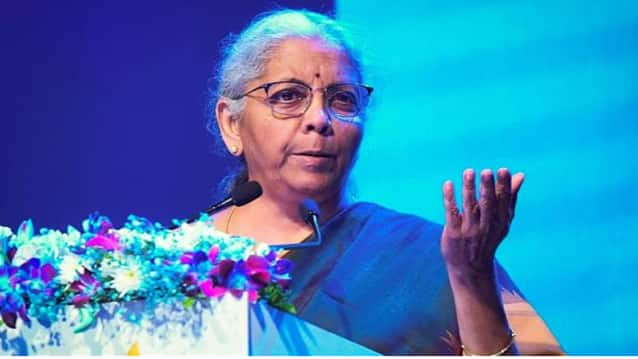
Ahead of the Union Budget 2026 to be tabled by Finance Minister Nirmala Sitharaman on February 1, 2026, the general insurance industry is less focused on rapid expansion or headline growth. Instead, the sector’s demands from this year's budget are more measured, driven by claims inflation, increasing climate-related losses, and higher expectations from customers and regulators. Budget expectations now reflect a shift in focus from growth rates to the long-term sustainability of insurance in India’s economy.
Health insurance is central to this shift. Having emerged as the largest and most consequential segment of general insurance, it now highlights both the gains made and the pressures the segment faces. “Health insurance, now the core of the general insurance market, needs policy support to counter rising medical inflation and enhance access, especially for vulnerable groups,” said Rakesh Jain, CEO, IndusInd General Insurance.
The larger concern is whether coverage can remain affordable and viable as medical costs rise and utilisation increases. Similar questions are now being raised across other lines of insurance covering assets and livelihoods.
Rising infrastructure investment and changing mobility patterns are pushing insurers to underwrite larger, more complex and longer-term risks. Pointing to this shift, Jain said that “India’s evolving mobility and infrastructure ecosystems demand sophisticated, future-ready risk solutions backed by stable regulation, stronger domestic reinsurance capacity, and clear catastrophe frameworks.” Insurers warn that without these measures, underwriting capacity could tighten even as risk exposure increases.
Also read: Indian Markets 2025: A Year That Redefined Resilience
The pressure is most visible in areas that have traditionally seen low insurance penetration. Homes, small enterprises, and local businesses are increasingly exposed to physical and economic shocks, particularly outside metro centres. “Significant focus on insuring houses and SME/MSMEs is also critical to ensure that the asset and lifestyle creation of India is not at risk due to physical or economic volatility,” Jain added. With asset ownership spreading rapidly across Tier 2 and Tier 3 regions, households and small businesses are becoming increasingly exposed to financial shocks.
Industry executives say climate-related risks have added urgency to the push for wider coverage. Events such as floods, cyclones and heat-related losses are now occurring with greater frequency. Underlining this shift, Jain said, “with rising climate-linked events, rapid urbanisation, and increasing asset ownership across Tier 2 and Tier 3 regions, home insurance traditionally underpenetrated requires policy incentives, tax benefits, and simplified product frameworks to drive mass adoption and strengthen household resilience.”
The industry is also seeking faster development of digital infrastructure to support growth. Jain outlined three priorities, starting with friction reduction. “India must double down on digital rails that cut friction, fraud, and administrative costs,” he said, calling for full funding and a time-bound rollout of the National Health Claims Exchange (NHCX).
Jain also pointed to Bima Sugam, launched in 2025 and expected to become fully operational in 2026, arguing it must be fast-tracked to enable seamless e-KYC, e-policy issuance, and a unified service window. Standard APIs and interoperable architecture, he adds, could reduce costs across health, motor, home, and commercial lines.
This push for systems and discipline was echoed by Naveen Chandra Jha, MD & CEO of SBI General Insurance, who said the sector is entering a new phase. Stronger regulatory oversight, improving claims governance, and rising customer expectations, according to Jha, are changing how insurers manage capital, governance and customer expectations.
According to him, the Budget’s role lies in expanding coverage without weakening fundamentals. “The budget presents an opportunity to deepen insurance penetration by improving affordability and access, particularly in underinsured segments such as small businesses, rural households and first-time buyers,” he said.
Targeted incentives for micro-insurance and social sector covers, along with relief on policy-level costs for low-premium products, could accelerate last-mile adoption, he pointed out, adding that climate-risk insurance and data-led reforms are areas where policy support could strengthen underwriting and claims outcomes.
Also read: Preventive Vigilance Vital for PNB's Progress with Strong Governance: MD Ashok Chandra
Aggregators, meanwhile, are focused on regulatory continuity. Abhishek Bansal, Chief Revenue Officer at InsuranceDekho, said that “last year’s GST reforms were a positive step in improving affordability and access to insurance.” Looking ahead, Bansal argued that “policy continuity and regulatory clarity will be critical to advancing the vision of insurance for all by 2047.”
Moreover, issues such as taxation of pensions and annuities, composite licensing, and micro-insurance, he said, matter more than short-term incentives in building a resilient ecosystem.
For business-focused platforms, the conversation turns to positioning. “There is a clear opportunity to position insurance as core financial infrastructure for Indian businesses, not just a compliance requirement,” said Tejas Jain, Founder & CEO of BimaKavach. Extending tax benefits beyond life and health insurance and encouraging digital risk covers, he added, could improve adoption among MSMEs facing rising cyber and operational risks.
The GST burden on employee insurance remains a specific concern for MSMEs. Sajja Praveen Chowdary, Director at Policybazaar for Business, said that “MSMEs usually rely on employee benefits like Group Health Insurance to attract and retain talent,” but existing GST rules prevent them from claiming input credit. While a total waiver may not be feasible, he argued that some relief could reduce long-term reliance on government subsidies for healthcare and social protection.
As per a Swiss Re report, India remained the 10th largest insurance market globally by nominal premium volumes in 2024, with a market share of 1.8 per cent. Insurance penetration in the country was only 3.7 per cent, with life insurance at 2.7 per cent and non-life at 1 per cent, while insurance density had increased marginally to $97.
According to the government data, 41.84 crore policies were issued in FY25 while collected premiums stood at Rs 11.93 lakh crore, paid claims of Rs 8.36 lakh crore, and reported assets under management of Rs 74.44 lakh crore as on 31 March 2025.
Importantly, the Parliament had passed a bill in December last year to allow up to 100 per cent Foreign Direct Investment in insurance firms, enabling more foreign entities to enter India. And eventually boost competition to drive efficiency in products and services. The bill had also introduced the provision of one-time licensing and the provision of suspension of license instead of straight away cancellation.