


The Indian corporate insurance landscape is undergoing a fundamental shift. Long characterised by once-a-year transactional renewals, the sector is now moving toward a model defined by continuous risk advisory and tech-driven mitigation.
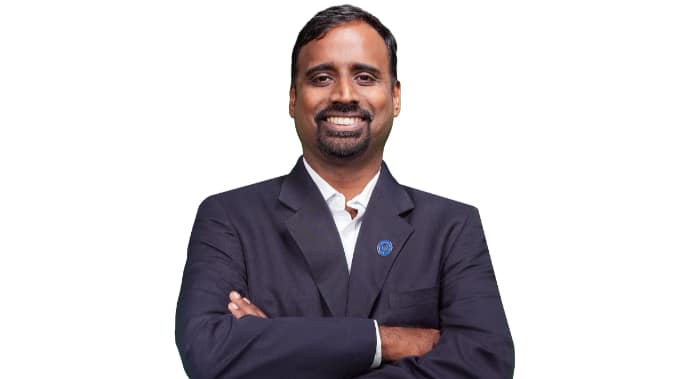
To understand how this evolution is impacting businesses from large enterprises to MSMEs, FE BFSI spoke with Sajja Praveen Chowdary, Head of Policybazaar for Business. He discusses the transition from being a mere aggregator to a high-touch risk partner, the impact of new data regulations, and the technological interventions streamlining the notoriously complex commercial claims process.
Q. Policybazaar for Business appears to be pivoting from a transactional aggregator model to a high-touch risk advisory partner. How is this transition actually manifesting for corporate India?
Historically, the corporate insurance segment was highly transactional. Brokers would typically engage only around renewal time to pitch premiums and close deals. We are changing that by bringing the same value-driven approach we used in retail to the corporate side. It is no longer just about completing a buying process. We are now focusing on two primary pillars: decreasing risk across all lines, whether it is employee benefits, cyber, or fire insurance and making the claims process significantly smoother. We have deployed a host of services, such as wellness layers and OPD plans for employee benefits and benchmarking tools for cyber risks, to suggest mitigation mechanisms before a crisis occurs. Our goal is to move the conversation from "buying insurance" to "managing and reducing risk."
Q. With the Digital Personal Data Protection (DPDP) Act now in play, what kind of surge are you seeing in demand for cyber liability and D&O insurance among Indian enterprises?
While there is a lot of discussion around the DPDP Act, I would say it is still very early for it to translate into a massive surge in insurance buying. We have started talking to clients about whether their current limits are sufficient given the new legal requirements, but we are not seeing a "rush" to buy yet. Often, companies still purchase cyber or D&O insurance because a contractor requires it or because they are undergoing an investment round. There is a lot of scope for growth here, as we are still slightly behind in adapting to these requirements. However, the conversation has certainly shifted from whether a company needs coverage to how much coverage is adequate.
Q. In a space crowded with legacy institutional brokers, what is your primary differentiator when competing for large-scale corporate accounts?
Our edge lies in using technology to put risk mitigation at the center of the relationship. While legacy players may focus on the transaction, we focus on how to bring down the risk in advance. We do this in an integrated manner so that every stakeholder, from the employee and the HR manager to the finance team, has a seamless experience. By using in-house technical experts, like our own team of doctors who can speak the same language as hospital or TPA doctors, we resolve issues in real time rather than letting them fester. This integration of tech and specialised human expertise is how we differentiate ourselves from the traditional channels.
Q. Global reinsurance markets have been hardening recently. How are you helping Indian businesses optimise their premiums without compromising on the depth of their coverage?
I actually view the current environment as a softer market with sufficient supply. Last year was challenging due to CBR regulations that required a large portion of premiums to stay within India, but the emergence of multiple International Financial Services Centres (IFSC) Insurance Offices (IIOs) in Gift City has eased that pressure. With GIC increasing its capacity and new Indian players like ITI Reinsurance and Reliance entering the fray, there is no major concern regarding market hardening at this point. We are able to find ample capacity to ensure our clients get comprehensive coverage at competitive rates.
Q. Beyond mandatory health covers, how are you encouraging the MSME sector to adopt balance sheet protectors like trade credit or specialised fire policies?
The MSME segment today is where retail insurance was a decade ago. There is a lot of skepticism and a lack of transparency. We are making insurance more accessible by creating transparent comparison platforms where SMEs can see exactly what is covered. For example, for small traders who do not want to block capital on annual marine policies, we have made it easier to purchase per-shipment covers via WhatsApp. We are also working with insurers to bundle products specifically for shop owners or small manufacturing units. By providing visibility and simplified digital processes, we are moving these businesses closer to the point of purchase.
Q. Commercial claims are notoriously complex. What specific technological interventions are you deploying to reduce settlement turnaround times?
The complexity usually stems from unstructured documentation rather than the technical nature of the claim itself. To solve this, we launched "Compass," a centralised system that integrates with the client’s systems. It automatically pulls necessary documents and sends automated reminders to different departments like legal, finance, or procurement about pending paperwork. This eliminates the endless back and forth of emails. We are also working with insurers to accept "proxy documents" to speed up the process. For health claims, our "Claim Setu" tool tells customers exactly what documents are missing in one go, which significantly reduces the time taken for reimbursements.
Q. Looking toward the "Insurance for All by 2047" goal, what is the one structural or regulatory change needed to fully digitise the commercial insurance ecosystem?
More than just regulatory changes, we need a massive shift in awareness and government push, especially in the SME sector. Currently, when a fire or accident happens in a small unit, the burden often falls on the government through subsidies or ex gratia payments because the business was uninsured. If we can mandate or at least strongly incentivise public liability and workers' compensation policies, it protects the entire ecosystem, including the low-income workers who suffer most when a business shuts down. While the claims process is already evolving from physical files to digital formats, the real priority must be ensuring the risk is covered in the first place.