


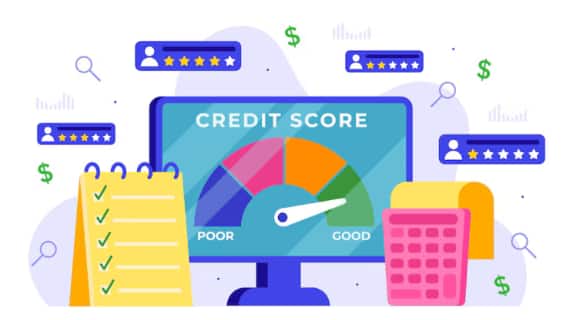
Meet Ravi.
He runs a small hardware shop in Coimbatore. Sells nuts, bolts, and electrical fittings. Has been at it for eleven years. Pays his suppliers on time. Collects from his customers every evening. Sends money home to his parents every month without fail.
Ask any bank whether Ravi is creditworthy, and they'll tell you they don't know. He has no loan history. His credit bureau file is thin. By traditional measures, he barely exists in the world of credit.
But look at his UPI transactions, and a very different picture emerges.
India has built one of the most extraordinary financial infrastructures in the world. UPI crossed Rs 314 lakh crore in transaction value in FY2025-26, with over 700 banks on the platform. It now accounts for nearly half of all real-time payment volumes globally. These are staggering numbers. But the more interesting story isn't the scale. It's what all those transactions are quietly telling us.
UPI is not just a payment trail. It is a behavioral diary.
Every time someone pays a utility bill, transfers rent, settles a vendor invoice, or tops up a family member's account, they are revealing something about how they manage money. Not how they once managed a loan. How they manage money today. Every day. Right now.
That is a fundamentally different kind of signal.
Traditional credit scoring asks a backward-looking question: has this person borrowed and repaid before? It works well for people with long credit histories. But India has millions of borrowers who don't fit that mold. Gig workers with variable income. Self-employed professionals with no salary slips. First-generation credit users. Rural entrepreneurs. Small merchants like Ravi.
For them, the bureau view is often incomplete at best, and invisible at worst.
UPI data allows lenders to ask a different question: how does this person actually handle money?
Does income arrive regularly? Do bills get paid before discretionary spending? Do balances recover after a large outflow? Are payment failures rare, or do they cluster at month-end, suggesting consistent liquidity stress? Does merchant activity show a growing business, a stable one, or a struggling one?
These aren't just data points. They are patterns. And patterns reveal a person’s Ability to pay and Intent to pay.
A salaried professional who's new to credit might show consistent rent payments, on-time subscriptions, regular SIP transfers, and zero payment failures over three years. A gig driver might show variable income but careful expense management and no erratic spending spikes. A kirana store owner might show daily collections, timely supplier settlements, and predictable seasonal patterns.
None of these people looks impressive on a traditional credit bureau report. All of them look quite responsible in their daily financial lives.
This is the gap that UPI transaction behavior can help close.
Of course, this has to be done carefully.
A single failed payment means very little. Repeated failures at the same point every month mean something real. A spike in high-risk merchant transactions is different from a seasonal jump in inventory purchases. High transaction volume isn't the same as repayment capacity. Context matters enormously.
This is where thoughtful AI plays a useful role. Not to replace human judgment, but to process large volumes of behavioral data and think like a human to surface the patterns that actually matter. Combined with bureau data, bank statements, and income signals, transaction behavior gives lenders a more complete, more current view of a borrower's financial life.
The consent framework is already in place. India's Account Aggregator system, introduced by the Reserve Bank of India, allows individuals to share financial data securely and digitally with regulated institutions. This isn't a data grab. It's a permissioned, transparent process that puts the borrower in control.
Used smartly, this approach changes what's possible.
Credit decisions can carry more context. Risk monitoring can become more proactive. Collections can be better timed, more empathetic, and less blunt. And credit can reach people who were previously underserved simply because the formal system had too little information about them.
That last point is the one that matters most.
India's credit gap is not primarily a problem of willingness. It is a problem of visibility. Millions of borrowers want credit and would manage it responsibly. But they are invisible to systems that only know how to read one kind of data.
UPI has already changed how India pays. Its next big contribution may be in changing how India lends.
Ravi has been running his hardware shop for eleven years. He has never missed a supplier payment. He has supported his parents every single month. He has weathered two slow seasons and come back stronger both times.
That story is already written. It just needs someone willing to read it.